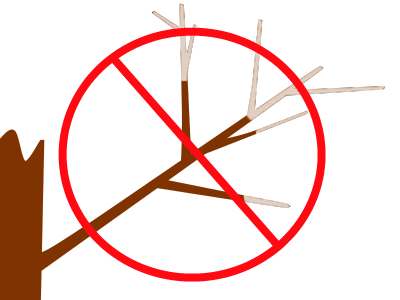
Topping is NEVER done.
- Causes rapid regrowth on the ends where the heading cuts were made
- Will likely cause decay in the stem/branch
- Tissues in branch are "starved" - no leaves for food
|
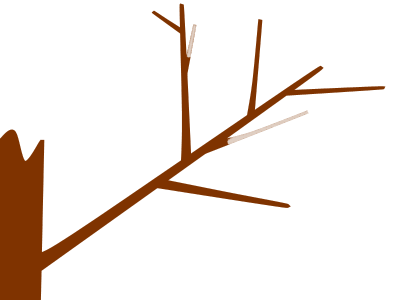
Pruning cuts - to eliminate included bark branches.
- Remove dead branches
- Remove weak attached branches
- Rubbing branches
- Needs to be done without creating large gaps in the canopy
|
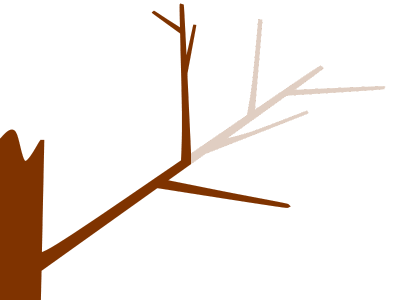
Reduction cut
- Reduces the overall size of the tree or branch
- Can be the most time consuming operation
- Should be limited to not more than 20% of crown removed
|
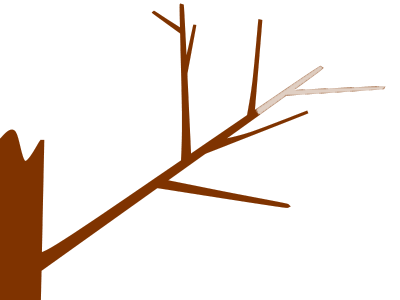
Shaping cut
- Has minimal impact on overal size
- Meant to make a tree have a more even appearance
- Can be time consuming, especially on trees with dense branching
|
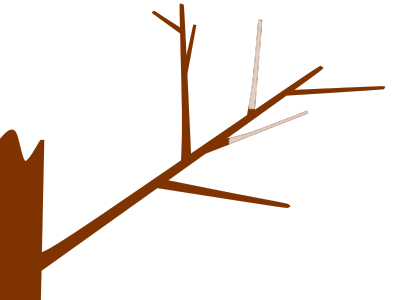
Thinning cut
- Done to improve light transmission
- Done to "lessen wind resistance"
- Will remain effective for about 1-2 years
|
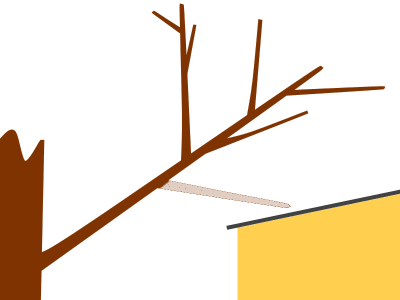
Clearance cut
- Generally recommend that clearance be done on what will be a 3-5 year cycle
- Generally trees grow on average 6-8" per year
- Only need to clear a structure 4 feet to obtain clearance for 3-5 years
|
